

Do Other Animals Have Sex For Recreation
Do animals have sex for pleasance?
We idea nosotros were the only species to bask intimate interactions, just every bit Jason G Goldman discovers, a few curious couplings in nature have changed our view.
S
Sex, we are told, is pleasurable. Yet you probably wouldn't think that if you waded through the scientific literature. That's considering almost scientific accounts of sexual behaviour rest upon evolutionary explanations rather than the more immediately relevant mental and emotional experiences. To say that we accept sex considering it helps usa to preserve our genetic legacies would be entirely authentic, but the more fleeting, experiential, pleasurable aspects of that nearly basic of social urges would exist missing. It would be like staring at a painting with half the color spectrum removed from it.
Ane thing we accept been curious well-nigh, though, is whether we are the only species that experiences sexual pleasure. The question of whether non-human animals enjoy information technology too is a perennial – and scientifically legitimate – question to ask.
In the concluding x to 15 years, scientific testify has begun to accumulate that animals practise experience a general sensation of pleasure – as everyone who has stroked a cat will know. In 2001, for case, psychologists Jeffrey Burgdorf and Jaak Panskepp discovered that laboratory rats enjoyed being amused, emitting a sort of chirpy express mirth outside the range of human hearing. And non only that, they would actively seek out the feeling.
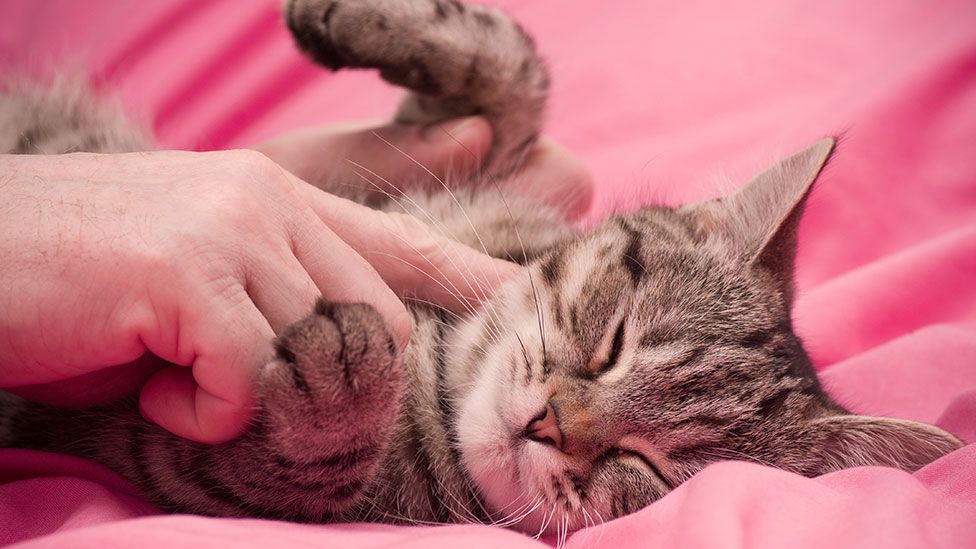
We know animals similar cats experience a full general sensation of pleasure, merely does this extend to sex activity? (Thinkstock)
But does that include carnal pleasure too? I mode to find out is to study instances of sex that tin't possibly result in procreation – for instance, amongst ii or more males, or females; where 1 or more than private is sexually immature, or sex activity that occurs outside of the breeding season.
Bonobos, for example, the so-called "hippie apes," are known for aforementioned-sex interactions, and for interactions between mature individuals and sub-adults or juveniles. Only yous don't need to be a bonobo to enjoy "not-conceptive" sex, white-faced capuchin monkeys exercise it as well. In both species, primatologists Joseph Manson, Susan Perry, and Amy Parish, found that that females' solicitation of males was decoupled from their fertility. In other words, they had plenty of sex even when pregnancy was impossible – such as when they were already significant, or while lactating just post-obit nativity. In addition, interactions amidst mature and immature individuals were just as common as interactions betwixt two adults, for both species.
If animals indulge in more sexual activity than is strictly necessary for conception, that too might hint at a pleasure-driven motivation to practise the deed. A female lion may mate 100 times per day over a period of nearly a week, and with multiple partners, each time she ovulates. It merely takes one eager sperm to begin the road from conception to birth, but the lioness doesn't seem to heed. Could it be that she enjoys it? Similarly high rates of encounters have been observed among cougars and leopards, too.
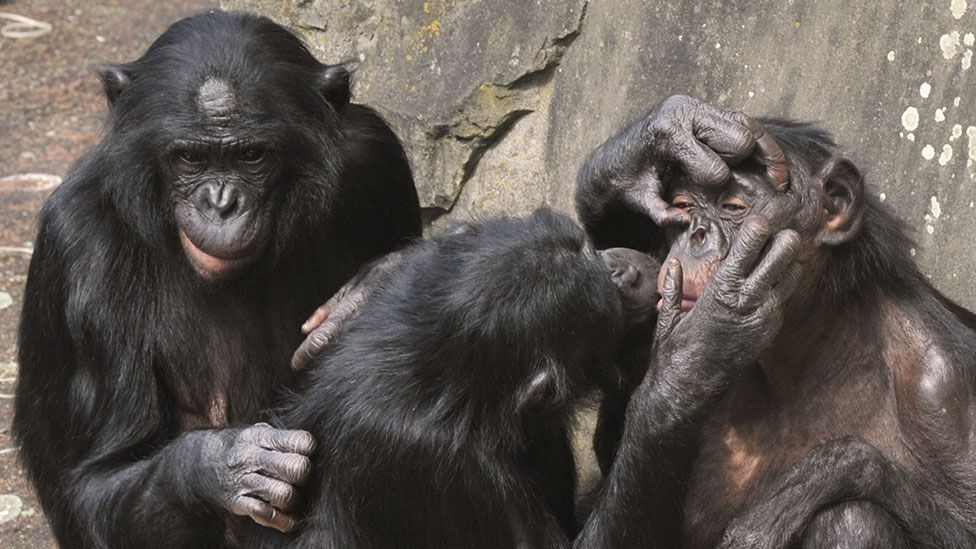
Researchers have been studying the wide and varied interactions that bonobos take role in for many years (Getty Images)
Another fashion you might learn whether non-human animals derive pleasure is whether they have orgasms. That's especially true for females, since conception does not rely on their ability to experience ane. Italian researchers Alfonso Troisi and Monica Carosi spent 238 hours watching Japanese macaques, and witnessed 240 individual copulations betwixt males and females. In a third of those copulations, they observed what they called female person orgasmic responses: "the female turns her head to expect back at her partner, reaches back with ane hand, and grasps the male."
While it's incommunicable to inquire a female macaque to interrogate her feelings, it is reasonable to infer that this behaviour is similar to that experienced by human being women, at least in some ways. That's in office because this macaque behaviour is sometimes accompanied by the type of physiological changes seen in humans, such as increases in heart rate and vaginal spasms. Interestingly, the female macaques were more likely to feel a response when copulating with a male who lived higher-up in their monkey dominance bureaucracy, suggesting that there is a social, not just physiological, component to this, not simply a reflexive responses to sexual stimulation.
Oral sexual practice also occurs with some frequency throughout the fauna kingdom. It's been observed in primates, spotted hyenas, goats and sheep. Female cheetahs and lions lick and rub the males' genitals every bit a office of their courtship ritual. Oral sex is besides well known among short-nosed fruit bats, for whom it is thought to prolong copulation, thereby increasing the likelihood of fertilisation.
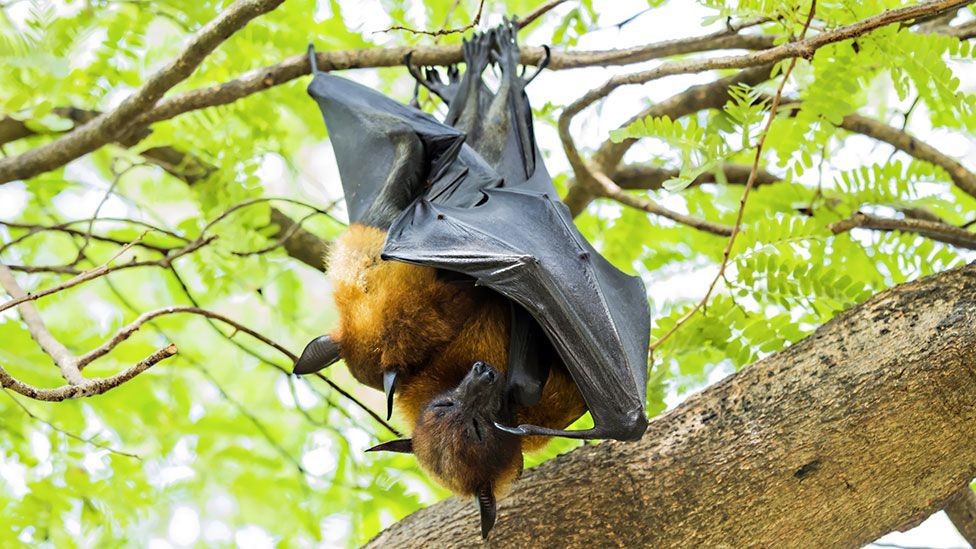
In brusk-nosed fruit bats, oral sex is thought to assist increment the likelihood of fertilisation (Thinkstock)
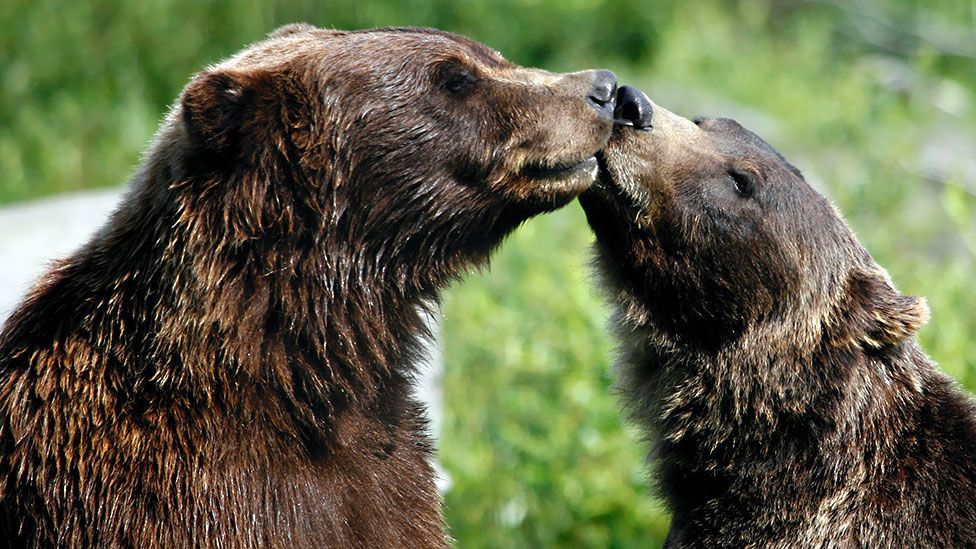
The near instructive example may come from a study of two captive male dark-brown bears published earlier this year in the journal Zoo Biology. Over the course of six years, researchers amassed 116 hours of behavioural observations, which included 28 acts of oral sex betwixt the two bears, who lived together in an enclosure at a sanctuary in Croatia.
The researchers, led past Agnieszka Sergiel of the Polish Academy of Sciences Section of Wildlife Conservation, suspect that the behaviour began as a outcome of early impecuniousness of suckling behaviour, since both bears were brought to the sanctuary equally orphans, before they were fully weaned from their absentee mothers. Information technology persisted for years, even after the bears anile out of cub-hood, peradventure considering it remained pleasurable and satisfying.
In most cases, researchers rely on evolutionary mechanisms to explicate such animal behaviour, to resist the pull of anthropomorphosis. Equally ethologist Jonathan Balcombe writes in Applied Beast Behaviour Science: "Pain's unpleasantness helps steer the animal away from 'bad' behaviours that chance the greater evolutionary disaster of death. Similarly, pleasure encourages animals to behave in 'good' ways, such as feeding, mating, and…staying warm or cool."
Could the urge in animals and humans to vary things in diet exist because there's an in-congenital desire to endeavor new things? (Thinkstock)
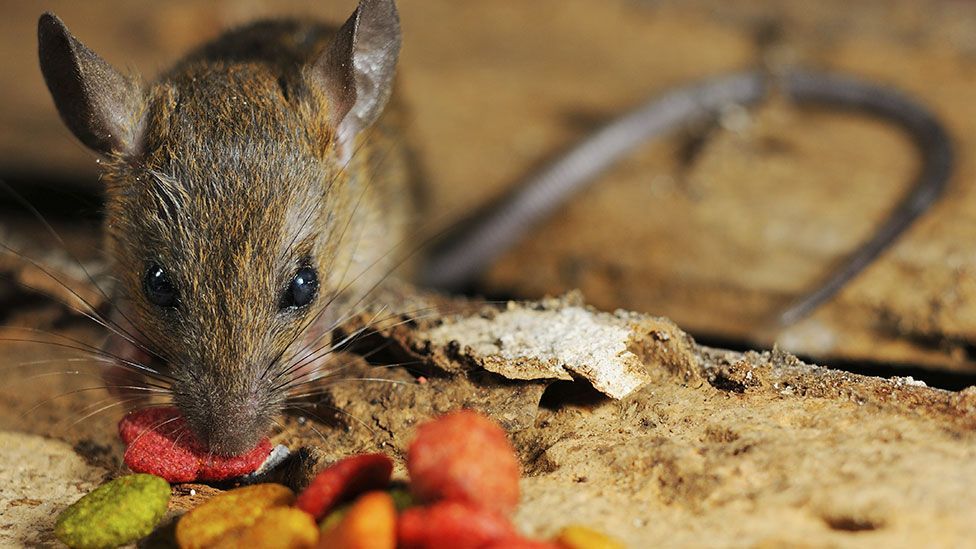
Notwithstanding Balcombe proposes that scientists shouldn't but view behaviour through the lens of evolution. He goes on to explicate that rats prefer unfamiliar foods subsequently three days in which they're only given a single blazon of food to eat. The simplest explanations for that pattern suggest that the rats' behaviour is adaptive because a diverseness of foods allows them to ingest a wider range of nutrients, or maybe because it allows them to avert overdependence on a possibly express food source. Just is that too narrow a view, when information technology's as plausible that the rats but became bored with their food and wanted to effort something new? To spice things up a bit? Both explanations are probably true, depending on whether you take an expansive, zoomed-out perspective, or a more immediate, zoomed-in perspective.
Likewise, sexual behaviour tin be wholly enjoyable while also emerging from a deeper developmental or evolutionary origin. It is precisely considering reproduction is and so important to the survival of a species that evolution made information technology so pleasurable that animals – both human and non-human – are motivated to seek it out even when formulation is undesirable or impossible. The urge to seek out that sort of pleasure, writes Balcombe, "is a combination of instinct on the one paw, and a powerful desire to achieve reward on the other." If so, information technology'due south clear why these powerful feelings of pleasure aren't just restricted to united states of america humans.
If you would similar to comment on this, or anything else yous take seen on Future, head over to our Facebook or Google+ page, or message us on Twitter .
Source: https://www.bbc.com/future/article/20140613-do-animals-have-sex-for-fun
Posted by: thomascuslichavy.blogspot.com
0 Response to "Do Other Animals Have Sex For Recreation"
Post a Comment